


Golf Coach Debunks Five Short Game Rules That Cost Amateurs Shots
Emma Booth explains why common chipping advice such as playing every shot off the back foot or keeping the head rigid can quietly wreck a golfer's short game.
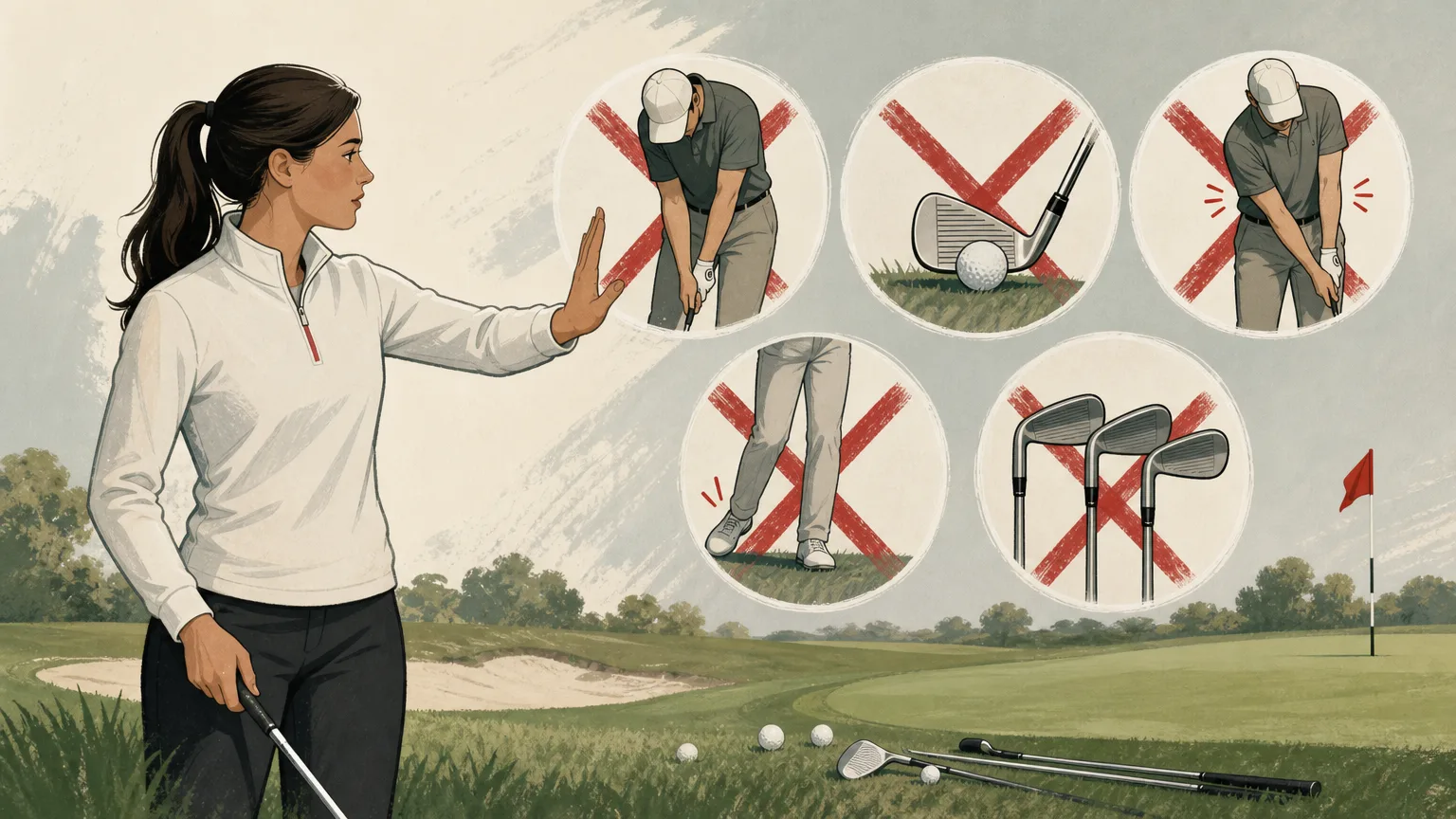
Short game practice is often the part of golf that gets put off, according to Golf Monthly, with players preferring full swings on the range before facing the consequences on the course. But a lack of reps is not the only problem, coach Emma Booth argues in the publication, pointing to a handful of widely repeated short game 'rules' that can do more harm than good.
The first is the instruction to play every chip off the back foot. Booth notes that while a back-foot position can help produce a lower, ball-first strike, applying it to every shot risks leaning the handle too far forward, de-lofting the club and either sending the ball skidding too far or producing a fat contact. She suggests matching ball position to the shot required, with a central position better suited to a softer, higher-landing chip.
Opening the clubface to add loft is the second habit under scrutiny. Booth says this technique has its place when height is genuinely needed, but for most chips it simply is not necessary and introduces extra risk by altering both loft and face direction. She reports that the majority of golfers she coaches improve significantly by keeping the face square and trusting the loft already built into the wedge.
The idea of getting underneath the ball comes in for particular criticism. Booth describes it as advice that has ruined countless chips by encouraging golfers to scoop with their wrists in an attempt to lift the ball manually. Her preferred cue is to strike down and through, as though squashing a bug beneath the ball, allowing the club's own loft to do the lifting rather than the player's hands.
Keeping the head down is singled out as perhaps the most reflexive piece of advice in golf, offered almost automatically whenever a shot goes wrong. Booth says she rarely needs to give that instruction in her coaching career, and that an excessive focus on stillness around the greens can create tension and restrict natural movement. Her advice is to stay focused on the ball while letting the head and body move naturally as the swing finishes.
The final myth addressed is the reliance on a single wedge for every chip. Booth accepts the appeal of sticking with one club early in a golfer's development, but argues that progressing means experimenting with different lofts while keeping the same basic technique. A lower-lofted club produces a releasing, running shot, she explains, while a higher-lofted wedge flies the ball further in the air and stops it more quickly.
Booth's broader message, as reported by Golf Monthly, is that short game improvement comes less from rigid rules and more from reading the shot in front of you and choosing the technique, ball position and club to match it.