


Mortara Fastest As Formula E's Gen4 Cars Debut At Jarama Test
Mahindra's Edoardo Mortara set the pace on a chaotic opening day of pre-season testing as Formula E's new Gen4 machinery hit the track for the first time near Madrid.
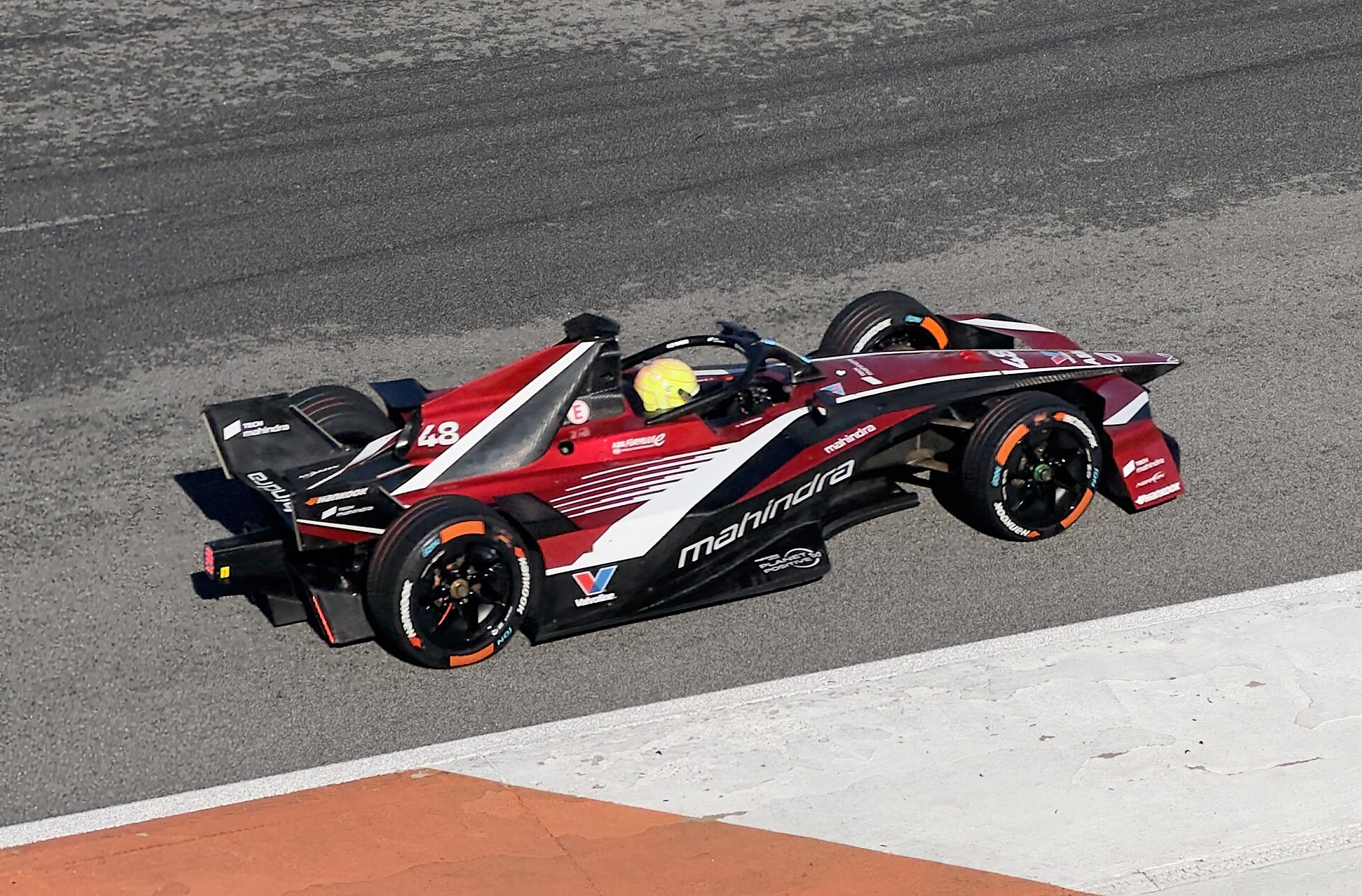
Edoardo Mortara headed the timesheets on the first day of Formula E's pre-season test at Jarama, as the championship's Gen4 cars ran collectively for the first time on the outskirts of Madrid, Autosport reported.
The Mahindra driver posted a lap of 1m24.344s in the afternoon session, three tenths quicker than Nissan's Zane Maloney, who ended the day in second on 1m24.681s after climbing from fourth place in the morning running, according to Yahoo Sports.
Mortara's benchmark was six tenths faster than the morning pace set by Jean-Eric Vergne, whose Citroen had led the opening running before slipping to 13th once the afternoon session got underway. Team-mate Nick Cassidy held the French outfit inside the top ten.
Porsche kept a low profile before lunch but moved up the order in the afternoon, with Nico Muller third and reigning champion Pascal Wehrlein fourth. Maximilian Guenther completed the top five.
Monday's test, which marked the start of a new technical era for the championship, was repeatedly interrupted, with seven red flags shown across the day — four in the morning and three in the afternoon, Yahoo Sports reported. The stoppages stemmed from a mix of radio system failures and cars running off the circuit.
The afternoon session produced the first crashes of the Gen4 era. Theo Pourchaire hit the barriers at Turn 3, while Nyck de Vries went off at Turn 9 late in the day. Enzo Fittipaldi's Lola also stopped at the end of the pitlane, prompting another red flag, and Fortescue Zero reported separate issues of its own.
The Gen4 car introduces a significant step up in performance. Qualifying power rises to 600kW, equivalent to roughly 815bhp, aerodynamic downforce has more than doubled compared with the previous generation, and teams now have permanent four-wheel drive. Bridgestone has also come in as the new tyre supplier, with teams working through fresh solutions to adapt.
Two distinct aerodynamic packages have been developed for high- and low-downforce circuits. The high-downforce front wing sits lower and at a different angle, with openings on either side designed to move airflow from the inner section of the wing toward the outer section.
James Rossiter, who worked with the FIA on the Gen4's track development, said the new rules hand teams far greater scope to compensate for shortcomings through electronics. "If you don't have a car that is mechanically perfect, you will be able to try to recreate that through software," he said.
Rossiter added that the regulations open fresh territory for engineers and drivers alike. "I would say we have unlocked a really interesting combination for engineers and drivers, something they will be able to work on in great depth."
Direct comparisons with recent race pace are complicated by conditions and car generations. Dan Ticktum's fastest lap at the Madrid ePrix in March was a 1m29.403s, set in cold and wet weather, while Mitch Evans posted a best of 1m27.461s during a Gen3 Evo test two years earlier. Despite the day's disruptions, the Gen4 cars were markedly quicker than both.
The Jarama running is the first of Formula E's pre-season programme, with teams expected to use the data gathered to address mechanical issues before the opening race of the new campaign.
Photo credits
Photo: Byxelized · CC BY-SA 4.0 · via Wikimedia Commons · shown in full here; cropped in thumbnails
